Background:
The United States has a responsibility to protect the right of Native Americans to vote. Yet more than 100 years after the Indian Citizenship Act of 1924, Native voters continue to face unique barriers when exercising that right, including voter suppression, discriminatory practices, and unequal access to voting.
The record is clear: Native voters have prevailed in more than 90% of the voting rights cases they have brought. But protecting the right to vote should not require repeatedly going to court. These cases demand significant time and resources that could be invested elsewhere in Native communities.
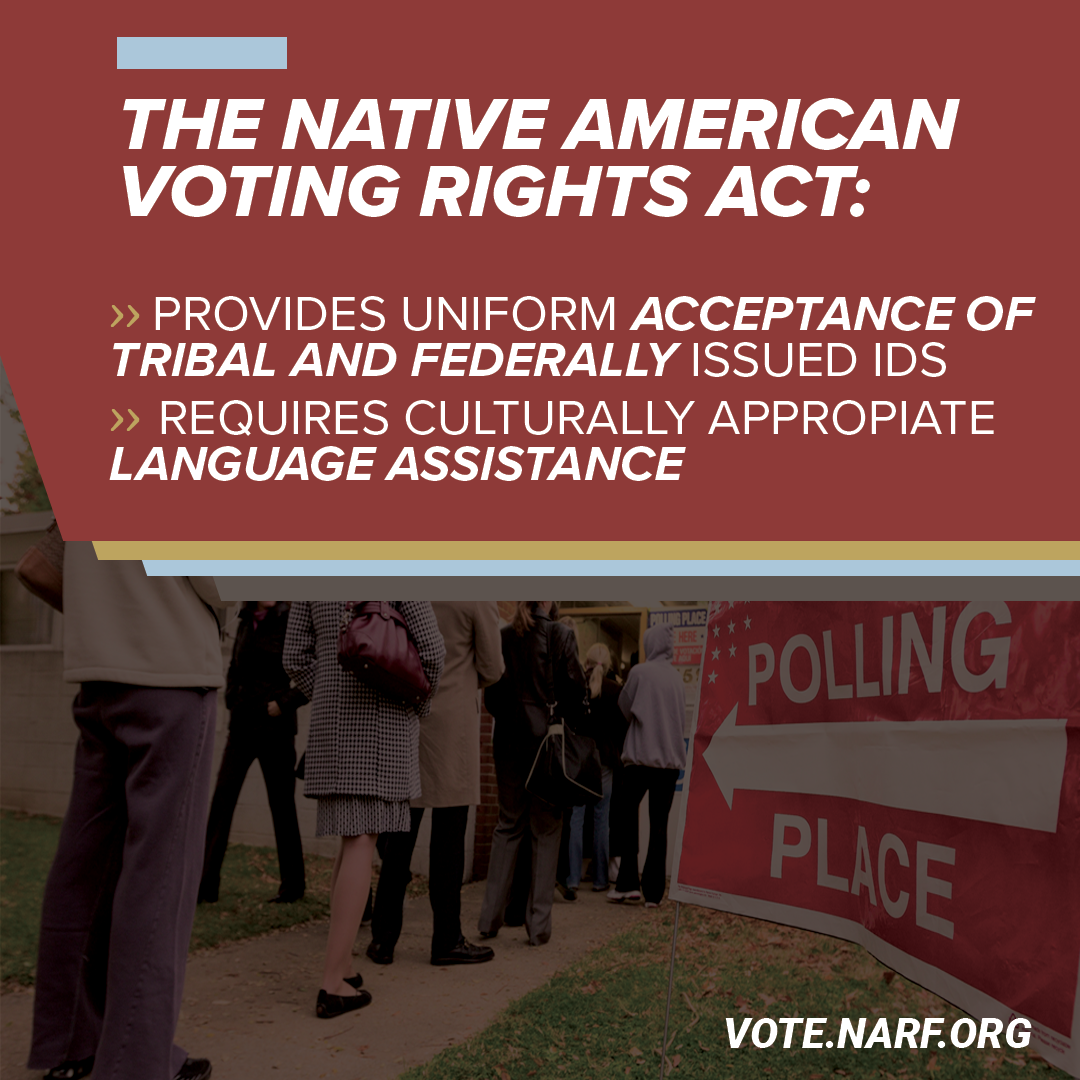
Federal legislation is sorely needed to establish consistent voting protections across Indian Country and address the distinct barriers Native voters continue to face. Native American Voting Rights Act (NAVRA) legislation would do just that.
Native American Voting Rights Act legislation is needed to establish federal protections designed around the realities of voting in Tribal communities and help ensure Native voters have fair and equal access to the ballot.
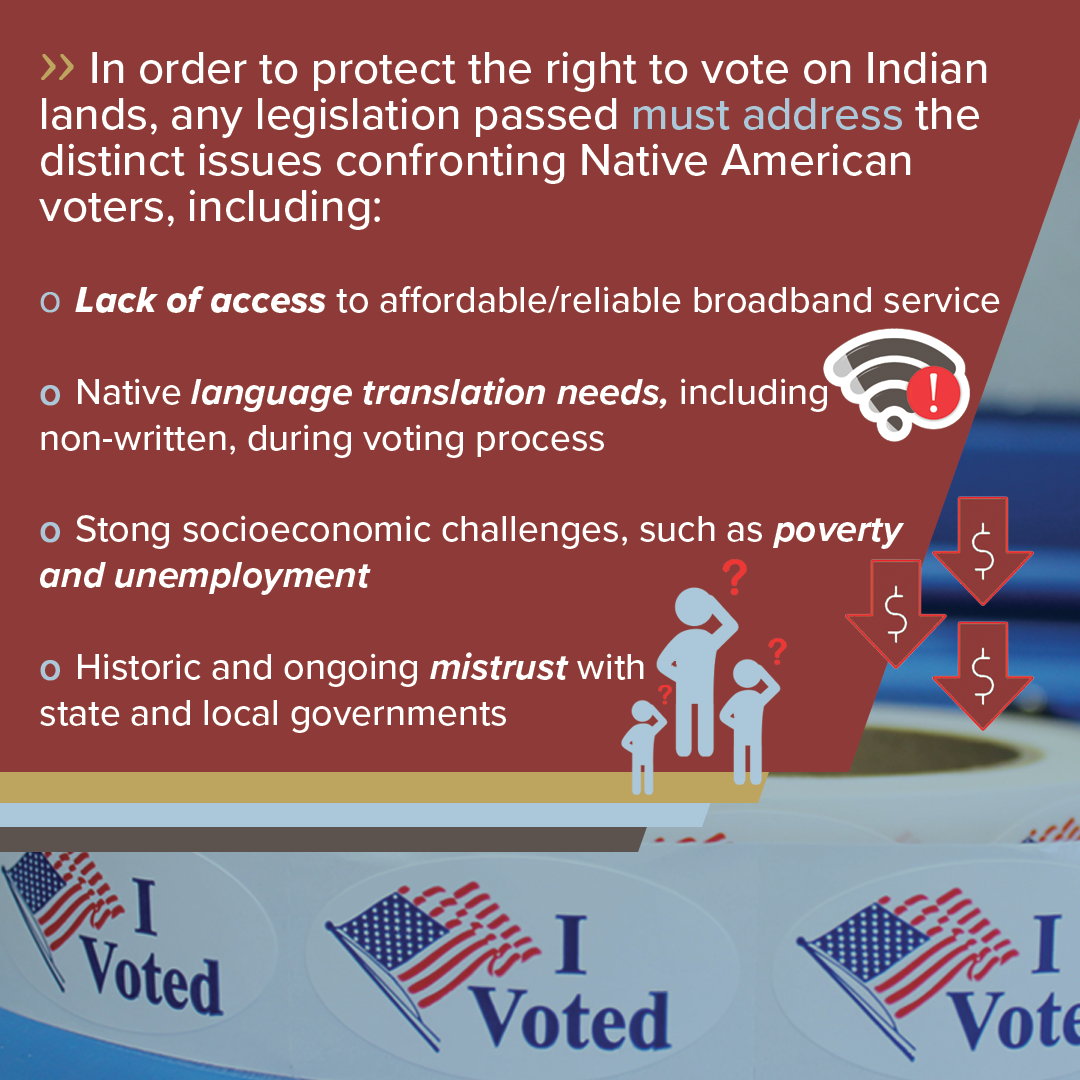
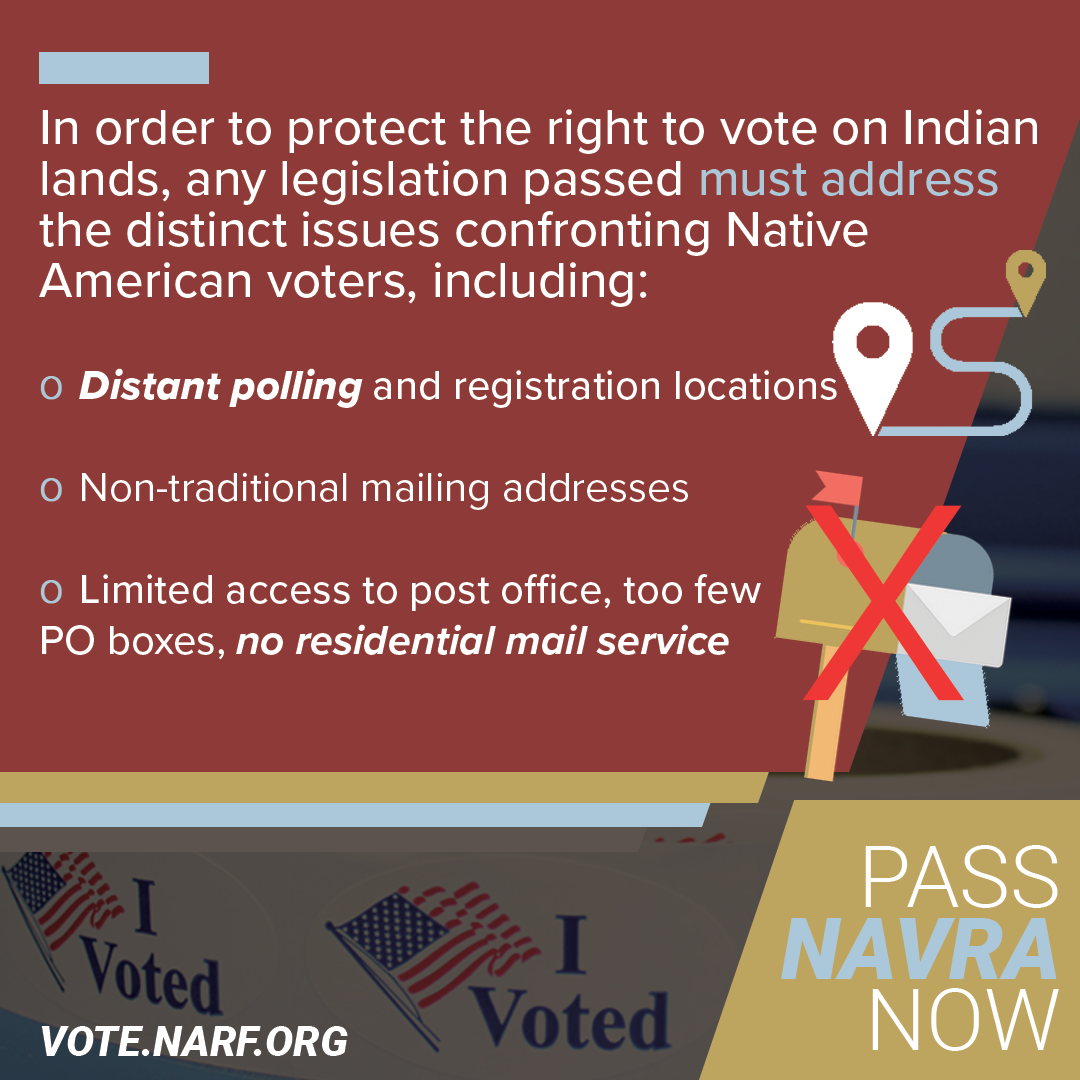
Native voters face distinct barriers, including:
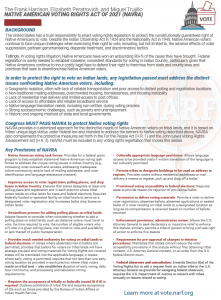
o Geographic isolation, often with lack of reliable transportation and poor access to distant polling and registration locations
o Non-traditional mailing addresses, overcrowded housing, homelessness, and housing instability
o Lack of residential mail delivery and limited access to post offices
o Lack of access to affordable and reliable broadband service
o Native language translation needs, including non-written, during voting process
o Strong socioeconomic challenges, such as poverty and unemployment
o Historic and ongoing mistrust of state and local governments
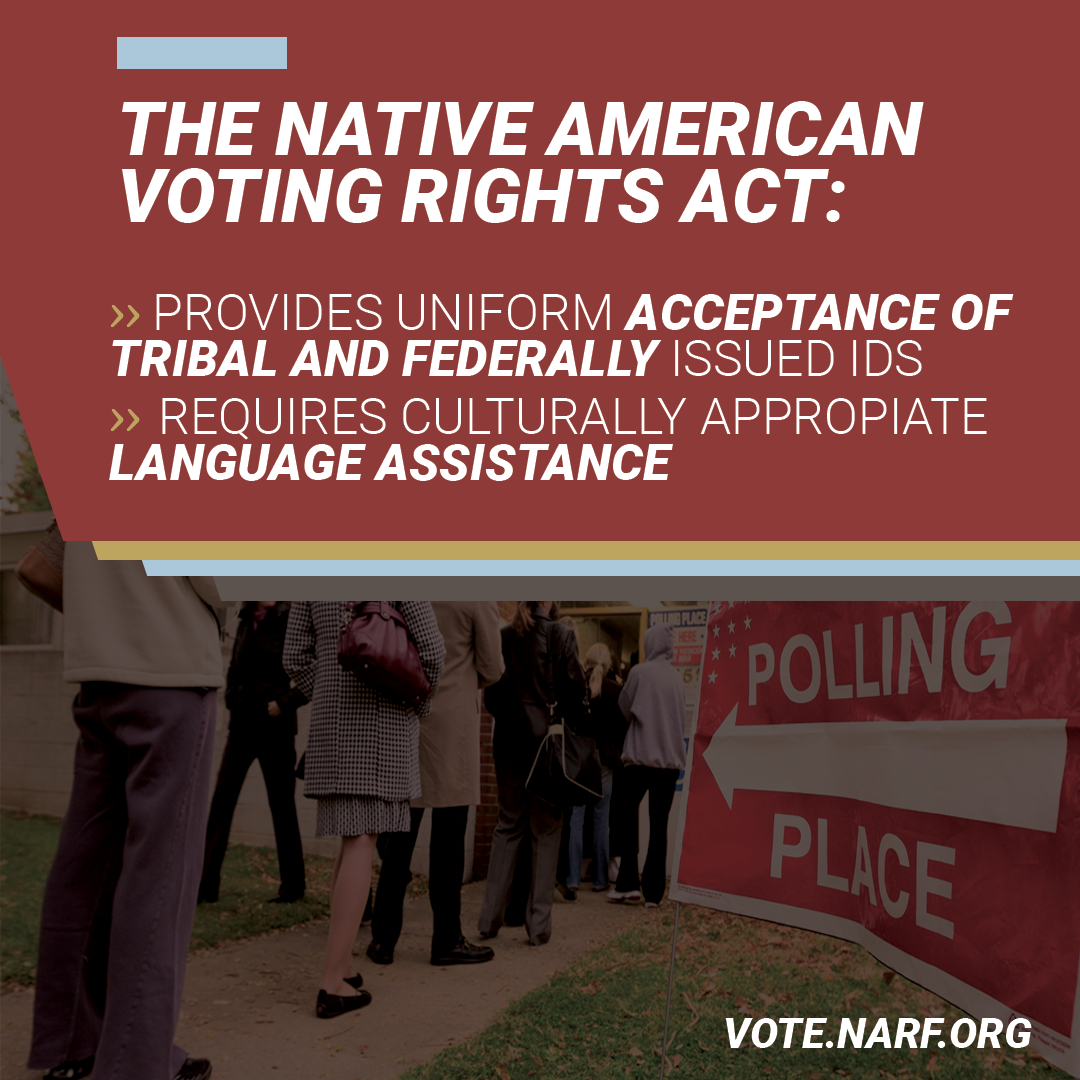

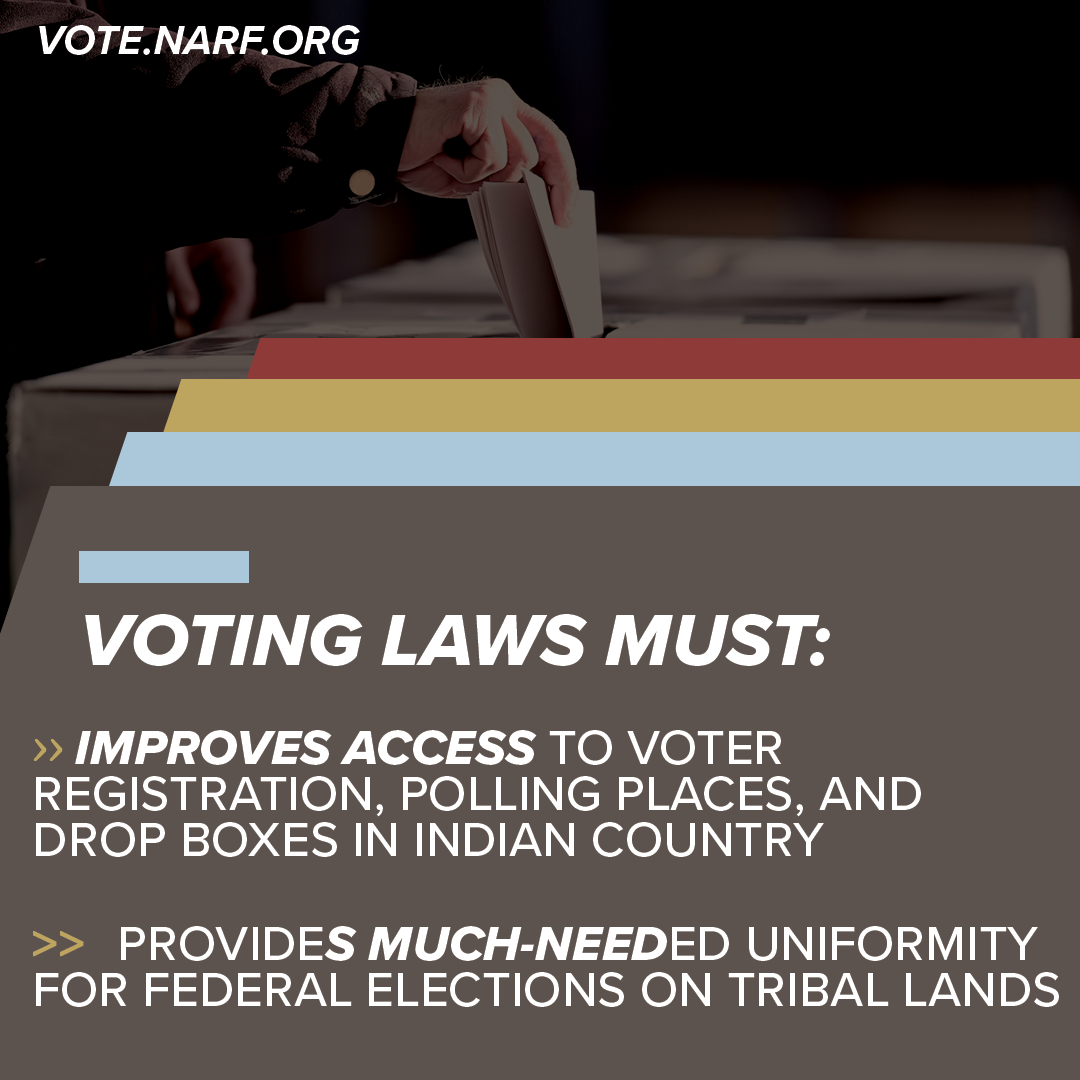


DRAFT TEXT TO USE:
Native American voters continue to face unique challenges when exercising their right to vote, including, but not limited to, the adverse effects of voter suppression, partisan gerrymandering, disparate treatment, and discriminatory tactics.
This is why legislation protecting Native voting rights needs to be passed. Learn more: vote.narf.org
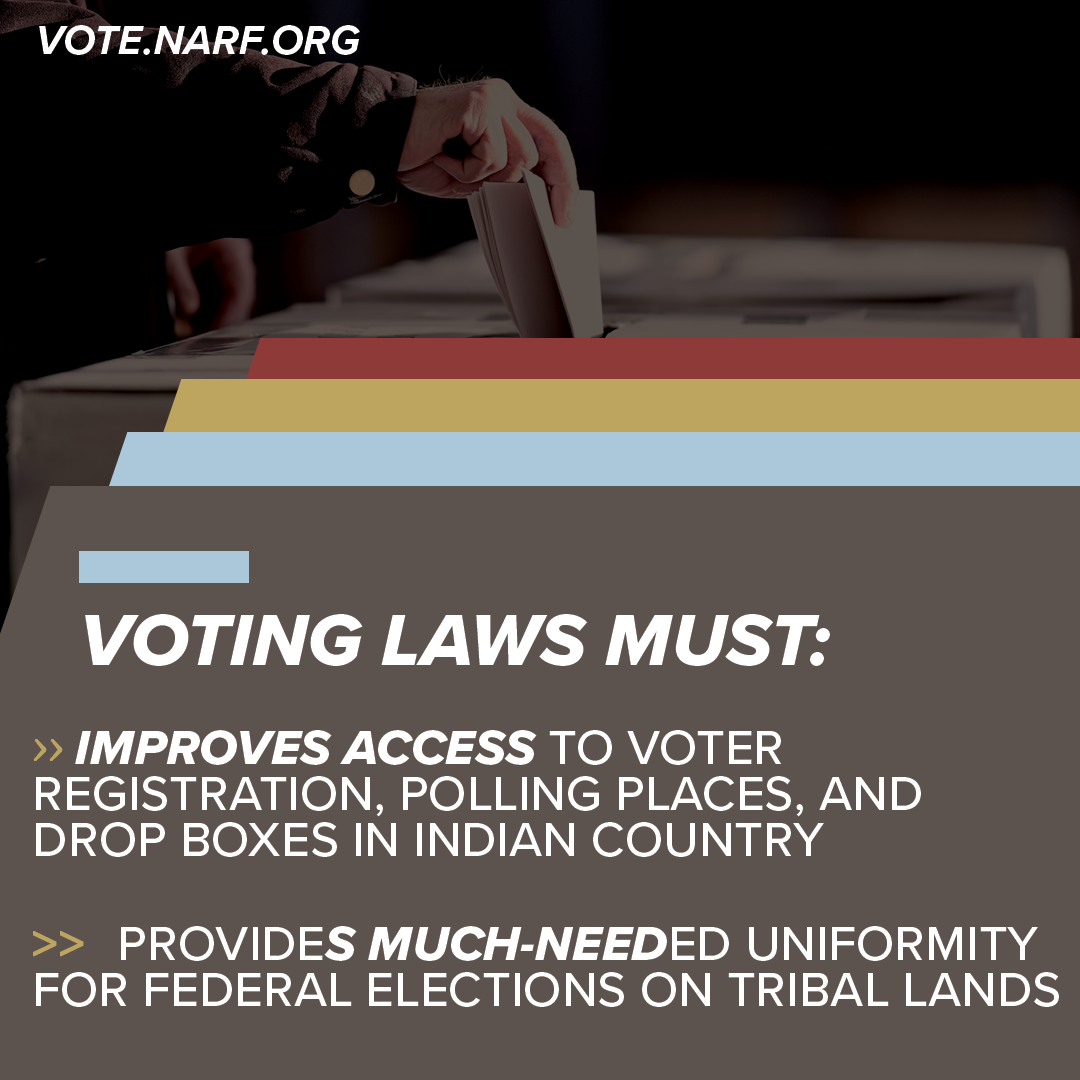


DRAFT TEXT TO USE:
Native American voters continue to face unique challenges when exercising their right to vote, including, but not limited to, the adverse effects of voter suppression, partisan gerrymandering, disparate treatment, and discriminatory tactics.
This is why Native American Voting Rights Act (NAVRA) legislation needs to be passed. Learn more: vote.narf.org

DRAFT TEXT TO USE:
Native American voters continue to face unique challenges when exercising their right to vote, including, but not limited to, the adverse effects of voter suppression, partisan gerrymandering, disparate treatment, and discriminatory tactics. This is why Native American Voting Rights Act (NAVRA) legislation needs to be passed. Learn more: vote.narf.org